

Service · Cabinet / CRM · Europe
Client Cabinet (CRM)
This is essentially a CRM for businesses across Europe: a shared environment for teams with unified access to client and internal data — from client records to services and processes.
from $799
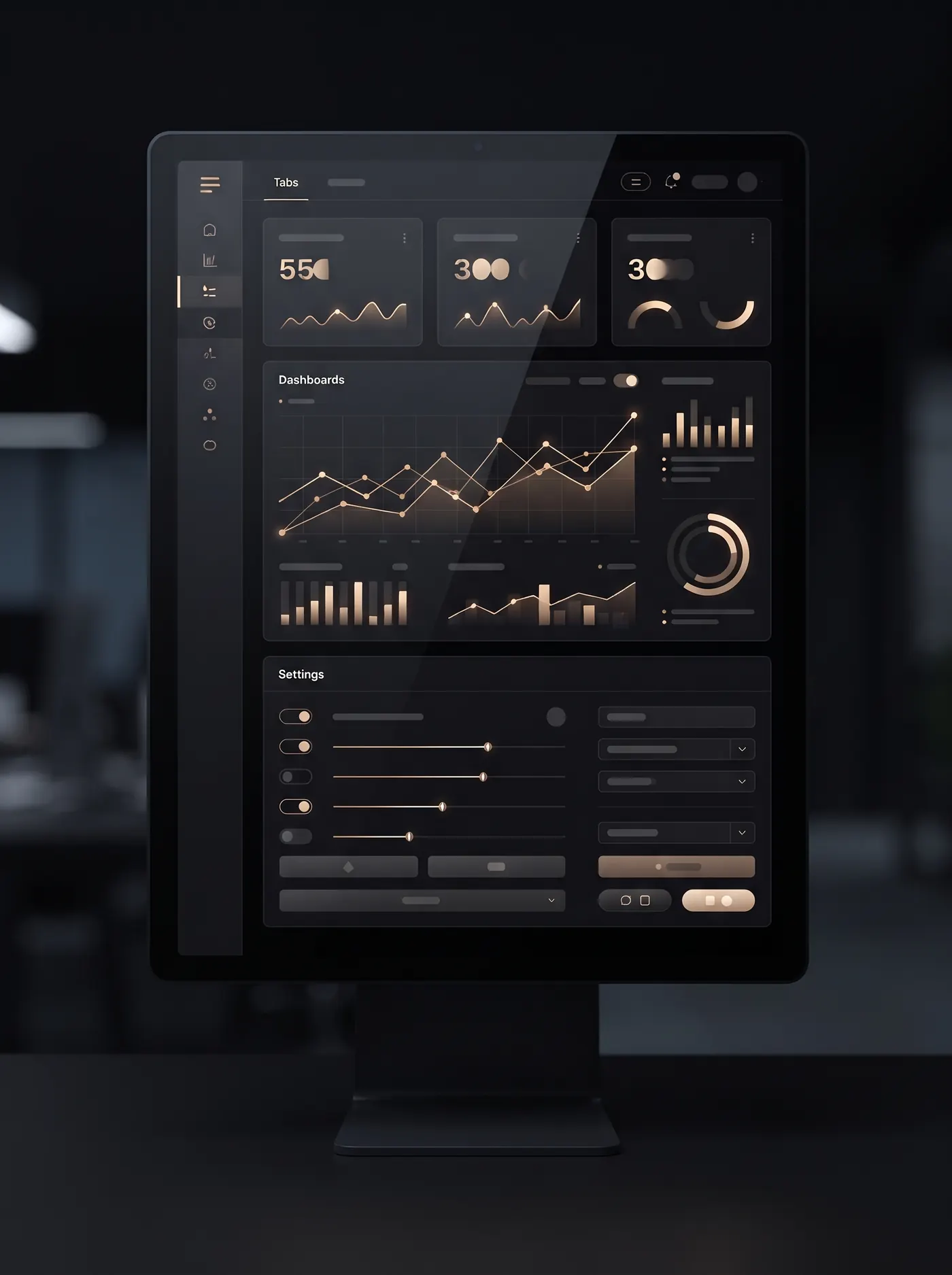
What it is
A client cabinet is a CRM system built for your business: a web platform that brings several teams and roles together in one workspace. Employees — and, if needed, clients — get shared access to the information they need, without scattered chats, spreadsheets, and "local" files.
It can hold both client information and internal business data: requests, statuses, documents, inquiry history, client records, and tracking of services or internal operations. The set of modules depends on the task — from a compact cabinet to a large system. The wider the functionality and the more processes involved, the greater the scope of work and the final cost.
What's included
-
Registration and authentication
Secure client login: registration, account recovery, sessions.
-
Staff roles and access
Permission levels: clients see their own data, managers see their workspace, admins see everything.
-
Request and process statuses
A clear pipeline: new → in progress → completed, with a history of changes.
-
Order and inquiry history
An archive of interactions in one place — fewer "lost" agreements.
-
Notifications for clients and the team
Email, Telegram, and in-app alerts for key events.
-
Service integrations
Payments, inventory, messengers, email, and external APIs — we connect whatever your process needs.
-
Admin panel and reports
Managing users, requests, and work summaries.
-
Scalable logic
You can start with an MVP and add modules without rewriting everything from scratch.
How pricing works
The starting point is from $799. The price grows with the scale of the CRM and the number of modules:
- The number of roles and the complexity of access for teams and clients.
- The scope of record-keeping: clients, requests, services, documents, reports.
- Integrations and the amount of backend logic.
- Interface design and responsive layout for tablet/mobile.
- Requirements for security, auditing, and data storage.
- Help with renting a server and hosting to deploy the system.
Payment and timeline
A cabinet is almost always built in stages. For new clients, there's a deposit per stage before work starts; no deposit is needed for returning clients. A typical MVP takes from 3–6 weeks depending on integrations.
The 3–6 week estimate applies to a basic MVP; after that, development is cyclical — each new module adds to the project's duration.
Development process
A client cabinet is a large project, so the work is split into stages. Each CRM module is discussed and delivered in steps — from documentation to integration into the overall system. Steps 01–04 are cyclical and repeat for every new feature.
-
We describe a specific CRM feature: roles, scenarios, data, and the module's completion criteria.
-
We design the implementation and define the scope, timeline, and cost of the stage.
-
We build the module and integrate it into the overall cabinet system without breaking what's already in place.
-
We test scenarios, access levels, and the module's stability, and make adjustments based on the stage's results.
-
Once all planned features are ready: final review, launch, access handover, and putting the system into operation.
What it pairs well with
Need a client cabinet?
Tell me which teams and data need to come together in a CRM — I'll propose modules, project stages, and a budget.